
Why almost every civilisation learned to ferment — and what that honestly does to your body.
In the supermarket the shelves are suddenly full of kimchi, kombucha and kefir. A colleague swears by her little jar of sauerkraut; another stirs something cloudy into her water. And just for a moment you think: does this actually work for me, or is it something from “over there”?

When I started reading into it, I noticed I had the question the wrong way round. I first thought: is this a new health trend I need to keep up with? But fermentation may well be humanity’s oldest kitchen trick. So the honest question isn’t “is this new, and good for me?”, but something lovelier and more uncomfortable at the same time: why did people do this for thousands of years, and why did we almost stop?
Let’s take it apart gently. What fermentation is, where it comes from, what it does to your body, and the shadow sides too, because those belong to the story just as much.
What does “fermented” actually mean?
Picture tiny cooks. Bacteria and yeasts that “pre-chew” your food a little. They eat sugars and leave behind acids, flavours and living cultures. That’s fermentation: desirable microbes turning food into something new.
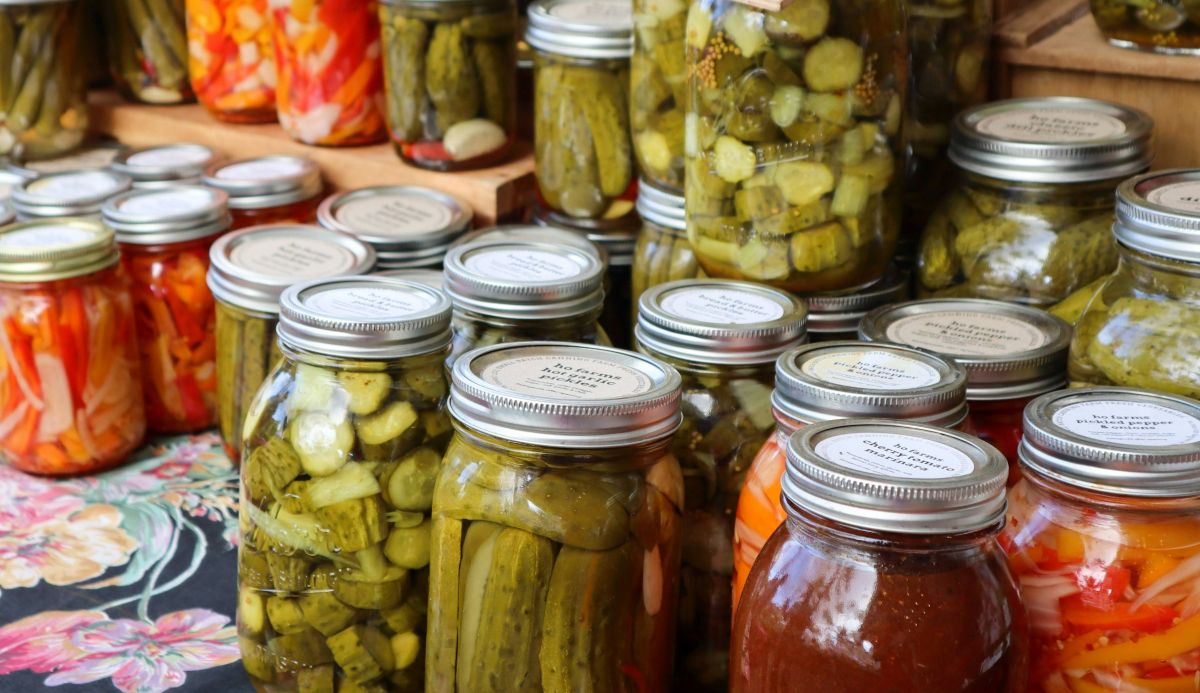
Kimchi and sauerkraut are made this way (fermented vegetables). Kefir and yoghurt are fermented milk. Natto and miso come from the soybean. Sourdough bread, vinegar, soy sauce, mature cheese, all the same idea, a different kitchen. You have probably eaten fermented food your whole life without thinking about it.


A nice image to grasp this: fermentation is really a kind of external digestion. Normally your body digests your food after the first bite. With fermentation, millions of invisible helper-cooks started hours, sometimes months — earlier. That’s what changes the taste, the smell, the texture and sometimes the nutritional value. It’s why natto, kefir and cheese taste so different from the ingredient they began as.
It didn’t start with health
Today we buy kimchi because someone online is talking about gut flora. Our ancestors did it because otherwise they went hungry.
Picture a village, thousands of years ago. No fridge. No freezer. No supermarket. You harvest cabbage in September. What do you eat in February? You cannot simply go to the shop. You have to survive the winter.
And then humans discovered something wonderful: when certain foods “spoil” in a controlled way, they actually stay edible far longer. Probably largely by accident. Someone forgot grape juice, it began to fizz — wine. Someone left milk standing — yoghurt. Someone buried cabbage with salt, months later, still edible — sauerkraut.
What I find fascinating is that people all over the world, independently of one another, arrived at the same solution. Not because they spoke to each other, but because they shared the same problem: how do you survive the gap between abundance and scarcity? In Korea, kimchi became a way to carry vegetables through winter. In northern Europe, sauerkraut. Among nomadic peoples, fermented milk. In Japan, miso and natto. The same trick, invented again and again.

Older than you’d think — and a beautiful open riddle
This surprised me most. Fermentation is older than most things we call “old”.
In the Neolithic settlement of Jiahu in China, archaeologists found traces of a mixed fermented drink of rice, honey and fruit from around 9,000 years ago, about as old as the first beers and wines in the Middle East. That’s older than the pyramids, older than writing, older than most organised religions.
And it may be older still. In Raqefet Cave in present-day Israel, researchers found evidence that the Natufians brewed beer roughly 13,000 years ago, hunter-gatherers, that is, before the domestication of grains. That turns an old question around. For a long time we assumed: first farming, then beer. But perhaps the wish to brew actually helped farming to begin. That idea, sometimes called the “beer hypothesis”, has been around since a scientific symposium in 1953, and remains contested to this day.

Honestly, I find that lovelier than a settled fact. Because in the same period people were already baking bread. Bread and beer are an inseparable pair, and which came first we don’t know for certain. Sometimes “we don’t yet know” is both the most honest and the most exciting answer.
What does it do to your gut flora?
Your gut is home to a whole world of microbes, your gut flora. Think of it as a garden: the more diverse the planting, the more resilient the whole.
In a careful Stanford study, 36 healthy adults ate plenty of fermented food for ten weeks. Their gut flora became more diverse, and several markers of inflammation in their blood went down, more strongly with larger portions. Strikingly, a diet rich in fibre did not do this over that same period. So fermented food seems to do something of its own.
Be honest with yourself here, though: this is promising, but still young research, largely from one good study, in healthy people. No miracle cure, but a real lead.
The invisible link: short-chain fatty acids
Why would diversity matter in the first place? There’s a mechanism underneath that many stories skip, and it ties everything together.
Some gut bacteria turn fibre and plant compounds into small molecules called short-chain fatty acids, butyrate is the best known. These feed the cells of your gut wall, help dampen inflammation, and send signals to the rest of your body, all the way to your brain, along what’s called the gut-brain axis.
So here’s how it connects: fibre and fermented food feed your microbes → your microbes make short-chain fatty acids → these keep your gut wall calm and your immune system in balance. It isn’t a loose collection of facts; it’s one chain. And it explains why “a spoonful of kimchi” and “a plate full of different vegetables” complement each other rather than replace each other.
Is your gut flora “different” — and why?
Here it gets fascinating, because your hunch is right: gut flora varies from person to person and from place to place. But the cause does not lie in origin or nationality, it lies mostly in eating habits and living environment, built up over many years.
Researchers compared children with a fibre-rich, traditional rural diet to children with an urban, heavily processed eating pattern. The first group had a richer gut flora, with bacteria that could break down exactly those fibres, bacteria almost absent in the second group. The difference was in the plate, not the passport.
Lovelier still: in people who had eaten seaweed for generations, gut bacteria turned out to carry a special enzyme for breaking down the seaweed around sushi (nori). That tool their gut bacteria had once “borrowed” from bacteria living on seaweed in the sea. It was acquired because the food called for it, not because it was baked into who they were.
So picture your gut flora as a toolbox that slowly fills with exactly the tools your eating history asks for. An eating pattern full of seaweed and fermented vegetables sometimes builds tools another pattern lacks. That’s your “matrix”, and it’s real.
But, and here’s the hopeful turn, that box isn’t locked, and it isn’t decided by where you were born. The Stanford study showed your gut flora shifts within weeks along with what you eat now. No one is shut out; you simply often start with a different box, and adapt a little more gradually.
How long does adapting take?
Faster than you’d think, and at the same time never quite “finished”.
A major dietary change can shift your gut flora measurably within a few days; that astonished researchers at the time. Clear adaptations usually appear within weeks. And some effects, the fine-tuning of enzymes, bile acids, your gut wall and immune system, can take months.

Imagine you moved to a place with a completely different eating pattern, with daily natto, miso, seaweed and fermented vegetables. Your gut flora would start shifting almost immediately. But would you then become someone with a wholly “different” gut flora, as though you’d eaten that way for generations? No. Some features of a community are built up over a great deal of time, and you don’t copy those in a few months.
There’s something else that moved me. Researchers see that when people move to an environment with a heavily processed, low-diversity eating pattern, their gut flora often becomes less diverse too, and this can accumulate over time and even across generations. So your gut flora tells not only what you ate today, but something of the eating history you grew up in. When you move, do you move on your own, or does a whole invisible community travel with you? Really, both.
And kefir, and milk?
Kefir deserves a separate note, because milk is a story of eating history. Whether you tolerate milk sugar (lactose) well depends partly on your ancestors’ traditions: in communities with a long history of keeping animals and drinking milk, the enzyme that breaks down lactose more often stayed active into adulthood. In communities without that tradition, less so.

The beautiful thing about fermenting: the microbes in kefir already eat part of that milk sugar. That’s why kefir is often tolerated better than plain milk, even by people who get a stomach ache from a glass of milk. An old trick, long before anyone knew the word “lactose”.
Important: “fermented” doesn’t automatically mean “alive”
This may be the most useful sentence in this whole article, and almost no one tells you.
Fermented is not the same as full of living microbes, and certainly not the same as probiotic. A lot of fermented food is heated or pasteurised before it reaches the shelf, think of tinned or jarred sauerkraut, and many ready-made bottles. By then the living cultures are largely gone. And bread, beer and wine are fermented, but the microbes are baked or filtered out.

In practice that means: if you want it with living cultures, look for “unpasteurised” or “contains live cultures”, and check whether it’s in the chilled section. It’s no disaster if there are no living microbes — fermented food has other valuable compounds too, but it’s only fair to know the difference, so you don’t pay for a promise that isn’t in there.
The honest shadow side: salt
I don’t want to paint things prettier than they are, and you rarely hear this amid the enthusiasm around fermentation.
Some of the very cultures we hold up as models for “eating lots of fermented food” also have strikingly high rates of stomach cancer. That seems to be linked mainly to salt, not to fermentation itself. In a meta-analysis, a high intake of fermented, salty soy products went together with a raised risk of stomach cancer, while non-fermented, unsalted soy products appeared protective. A high intake of heavily salted pickled vegetables has likewise been linked, in research, to higher risk.
The mechanism is honest enough to explain: salt isn’t itself a carcinogen, but a lot of salt can damage the stomach wall, thin the protective mucus layer, and help the bacterium Helicobacter pylori colonise the stomach, and that chronic inflammation plays a role in stomach cancer.
Important to add at once, so I don’t frighten you needlessly: this is about a lot, over a long time, and the world doesn’t stand still. Traditional kimchi from before the fridge was extremely salty; modern recipes generally use far less salt, and stomach cancer rates in places like South Korea have actually fallen sharply over recent decades. So the message isn’t “be afraid”, but “stay awake”: enjoy variety, keep it moderate, and where you can, choose less salty versions.
And those probiotic pills?
An understandable question, and one you may be asking yourself. The effect of probiotic pills depends strongly on the precise bacterial strain and on the person. For healthy people the evidence is mixed, and much remains unknown. So, no guaranteed miracle. Real food, a spoonful of kimchi, a glass of kefir, delivers a living, varied mix rather than one isolated strain. That’s not a promise, but it’s a more honest starting point than a tub with big words on it.

Stay awake: a few safety notes
Most fermented food is safe and valuable. But more isn’t always better, and a few things deserve attention.
- Kombucha. Very occasionally, serious problems have been described, such as liver damage, rare, mostly with home-brewed or strongly fermented batches, or in vulnerable people. Reviews advise against kombucha during pregnancy, in young children, in kidney failure, and with a weakened immune system.
- Natto and vitamin K2. Natto is exceptionally rich in vitamin K2. If you take blood thinners of the vitamin-K-antagonist type, this can affect how they work. Discuss it with your GP or anticoagulation clinic.
- Histamine. Fermented products can contain a lot of histamine. If you’re sensitive, that can cause headache, flushing, itching or palpitations.
- Fermenting at home. Improperly preserved food, for example home-fermented fish, or garlic in oil — can in rare cases cause botulism, a serious form of poisoning. Follow trustworthy recipes with the right acidity, hygiene and storage.
Is it really necessary? And how much?
Honestly: strictly necessary, it isn’t. The basics stay dull and powerful, eat variously, lots of different plants, enough fibre. That’s what your gut flora is built on.
Fermented food is a valuable addition, not a condition. In the Stanford study people ate generous portions a day, but that was an experiment, not a prescription. A level-headed line: better a little, regularly, than a great deal now and then, and if your gut isn’t used to it yet, build up gently. Exactly how much is optimal, nobody yet knows.

In closing
You don’t have to suddenly live like someone from a very different food culture. Your gut flora is not a contest, and not a backlog you must catch up on. It’s more like a garden that slowly grows used to what you give it, generation after generation, and also simply: meal after meal.
Perhaps we, with our fridges and sterile surfaces, are in fact the exception in a long history in which people almost always ate something alive. And perhaps a jar of kimchi is more interesting than it looks for exactly that reason: it tells you something not only about food, but about the history of humankind itself, and about the fact that we are less of a single individual than we think, and more of a walking community of human and non-human life.
What would change if you saw your plate not as something to optimise, but as a place where you patiently teach your body something new?
Important: this article shares general science, not personal medical or dietary advice. Do you have gut or liver complaints, are you pregnant, do you take medication (such as blood thinners), or do you have a weakened immune system? Then discuss it with your GP or a treating specialist. They can look at your situation — a blog cannot.
Related reading
- Glutamine: your gut’s favourite food
- The liver: the quiet workhorse
- Olive oil: liquid gold, or marketing?
- The body is not a calculator
Sources
- Wastyk HC, Fragiadakis GK, Perelman D, et al. Gut-microbiota-targeted diets modulate human immune status. Cell. 2021;184(16):4137–4153. https://doi.org/10.1016/j.cell.2021.06.019
- David LA, Maurice CF, Carmody RN, et al. Diet rapidly and reproducibly alters the human gut microbiome. Nature. 2014;505(7484):559–563. https://doi.org/10.1038/nature12820
- De Filippo C, Cavalieri D, Di Paola M, et al. Impact of diet in shaping gut microbiota revealed by a comparative study in children from Europe and rural Africa. PNAS. 2010;107(33):14691–14696. https://doi.org/10.1073/pnas.1005963107
- Hehemann JH, Correc G, Barbeyron T, et al. Transfer of carbohydrate-active enzymes from marine bacteria to Japanese gut microbiota. Nature. 2010;464(7290):908–912. https://doi.org/10.1038/nature08937
- Vangay P, Johnson AJ, Ward TL, et al. US immigration westernizes the human gut microbiome. Cell. 2018;175(4):962–972. https://doi.org/10.1016/j.cell.2018.10.029
- Ségurel L, Bon C. On the evolution of lactase persistence in humans. Annual Review of Genomics and Human Genetics. 2017;18:297–319. https://doi.org/10.1146/annurev-genom-091416-035340
- Marco ML, Sanders ME, Gänzle M, et al. The International Scientific Association for Probiotics and Prebiotics (ISAPP) consensus statement on fermented foods. Nature Reviews Gastroenterology & Hepatology. 2021;18(3):196–208. https://doi.org/10.1038/s41575-020-00390-5
- Suez J, Zmora N, Segal E, Elinav E. The pros, cons, and many unknowns of probiotics. Nature Medicine. 2019;25(5):716–729. https://doi.org/10.1038/s41591-019-0439-x
- McGovern PE, Zhang J, Tang J, et al. Fermented beverages of pre- and proto-historic China. PNAS. 2004;101(51):17593–17598. https://doi.org/10.1073/pnas.0407921102
- Liu L, Wang J, Rosenberg D, et al. Fermented beverage and food storage in 13,000 y-old stone mortars at Raqefet Cave, Israel. Journal of Archaeological Science: Reports. 2018;21:783–793. https://doi.org/10.1016/j.jasrep.2018.08.008
- Kim J, Kang M, Lee JS, et al. Fermented and non-fermented soy food consumption and gastric cancer in Japanese and Korean populations: a meta-analysis of observational studies. Cancer Science. 2011;102(1):231–244. https://doi.org/10.1111/j.1349-7006.2010.01770.x
- D’Elia L, Rossi G, Ippolito R, Cappuccio FP, Strazzullo P. Habitual salt intake and risk of gastric cancer: a meta-analysis of prospective studies. Clinical Nutrition. 2012;31(4):489–498. https://doi.org/10.1016/j.clnu.2012.01.003
- Ren JS, Kamangar F, Forman D, Islami F. Pickled food and risk of gastric cancer — a systematic review and meta-analysis. Cancer Epidemiology, Biomarkers & Prevention. 2012;21(6):905–915. https://doi.org/10.1158/1055-9965.EPI-12-0202
- Sannapaneni S, Philip S, Desai A, et al. Kombucha-induced massive hepatic necrosis: a case report and a review of literature. Gastro Hep Advances. 2023;2(2):196–198. https://doi.org/10.1016/j.gastha.2022.09.014
Leave a Reply