It’s evening, you’re still scrolling, and everywhere you look someone is spooning collagen into their coffee. A friend swears by it. In the shop your eye landed on a jar, fifty euros, four grams a scoop, and for a moment a little voice whispered: should I be doing this too?
Let me be honest: I use it now and then myself. And just like you, I want to believe it works, while a doubt I can’t quite shake keeps nagging. So this time, let’s actually find out. No sales pitch, no cynicism, only what the research genuinely shows. Because the honest truth sits somewhere in the middle, and that’s exactly why it’s worth telling.
What is collagen, really?
Picture your skin as a building. Deep below the surface stands a sturdy scaffold of protein fibres. That scaffold is collagen, and it keeps your skin firm, supple and full.
As the years pass, your body builds new scaffolding more slowly and breaks down the old more quickly. The structure sags a little. You see it as fine lines, and skin that springs back a touch less. It’s a normal part of growing older, not a flaw, not a failing.
The question behind this whole article is simple: if you drink collagen, do you rebuild that scaffold? Or are you mostly paying for hope?


Not one substance, but a whole family
Most people talk about “collagen” as if it were a single thing. It isn’t. Collagen is a family of proteins. In humans, around 28 different types have been described; types I, II and III are by far the best known.
- Type I — the champion. By far the most common collagen in your body (often put at around 90%): skin, tendons, bone, blood vessels. Built to resist pulling, like the thick cables of a bridge.
- Type II — the shock absorber. Mainly in cartilage and joints; it cushions pressure.
- Type III — the flexible partner. Often sits alongside type I, in skin and blood vessels, giving suppleness.
- Type IV — the filter. Not a thick fibre but a fine mesh, in the thin layers between cells.
- Type V — the organiser. Helps shape type I.
For your skin, this is what matters: your skin mostly makes type I, with a good helping of type III alongside. So a supplement that might, in theory, do something for the skin is aiming at those two, which is why skin supplements usually come from beef or fish (rich in types I and III), while joint products are often based on chicken cartilage (type II).
Does it really work, if you take it?
Here’s where it gets interesting, because the answer is neither “nonsense” nor “miracle”.
Two large summary studies have laid dozens of randomised trials side by side. One pooled 19 studies with 1,125 people; another 26 studies with 1,721 people. Both found the same thing: people who took hydrolysed collagen for roughly two to three months saw, on average, a modest but real improvement in skin moisture and elasticity, and sometimes in wrinkles.
Note that word: modest. Not ten years younger in a jar.
And now the honest caveat, because it belongs here just as much. Many of those studies are small, and some test a commercial branded product made by the manufacturer itself, a well-known source of bias. The large review openly flagged several forms of bias and called for bigger, independent trials. One frequently cited “positive” study even tested a drink that contained not only collagen but also vitamin C, zinc, biotin and vitamin E, so you can no longer tell what actually caused the effect. The evidence points in the right direction, then, but it’s softer and more uncertain than the advertising would have you believe.
But does your body even absorb it?
A logical objection: collagen is a protein, and doesn’t your stomach simply snip proteins into pieces? It does. Yet “it gets destroyed” is too quick.
Digestion produces tiny fragments, dipeptides with names like Pro-Hyp. These have genuinely been found in people’s blood after drinking collagen. In the lab they appear to nudge skin cells (fibroblasts) into more activity. So it isn’t that you “stick” collagen straight onto your skin; it works more like a signal to the building site: hey, there’s work to be done.
But here too I’ll stay honest: that fibroblast effect is shown mainly in lab dishes and in animals, not in people looking in the mirror. And part of the effect may simply come from the extra protein and building blocks you’re taking in. That piece isn’t fully settled.
How much and what about that €50 jar?
In the studies that showed an effect, people used roughly 2.5 to 10 grams a day, usually for eight to twelve weeks. Consistently, not just once.
And that’s exactly where some products fall down. Shop doses vary enormously. A jar with four grams a scoop sits at the low end of what worked in research. Fifty euros for such a jar, then, means a steep price for a modest dose. That doesn’t make it worthless, but it’s worth knowing what you’re buying, and above all what those four grams are. Labels sometimes say “4 g collagen”, sometimes “4 g protein”, sometimes “4 g broth extract”. Those aren’t necessarily the same thing. A sober question helps: how much am I paying per gram of active ingredient? Compare that with a bag of hydrolysed collagen powder, and the powders often win on price.

Powder, broth, or simply food?
This is the part I love most, because here science, marketing and nostalgia get tangled together. Let’s lay all the sources side by side.
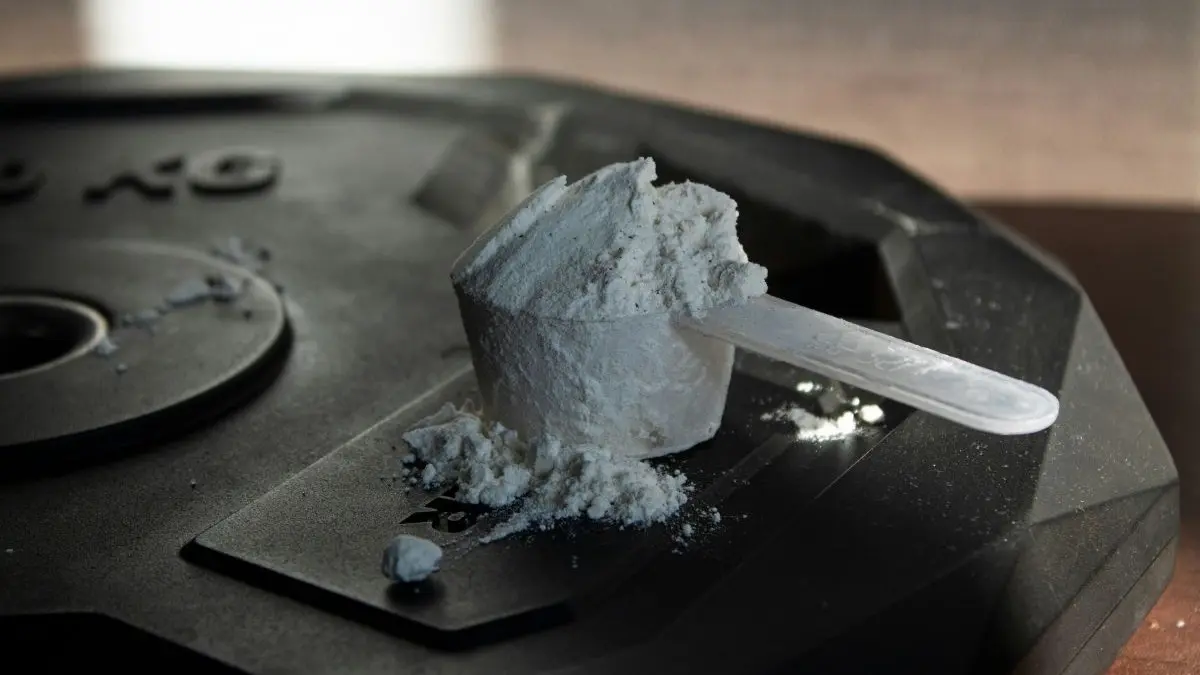
Hydrolysed collagen powder is the market leader and, importantly, the form almost all the positive research was done with. “Hydrolysed” means the big fibres have already been pre-cut, so it dissolves well and is easy to dose. The most evidence, the clearest dosing.
Beef broth concentrate (that honey-like paste you now see everywhere) feels more natural and more luxurious. But here’s a sobering fact: home-simmered or concentrated bone broth provides a highly variable, unreliable amount of collagen amino acids, and on average less than a therapeutic dose of a supplement. It’s real food, and if you enjoy it: wonderful. But as a “treatment for your skin”, the dose is a lottery.

Gelatine is really the forgotten sibling: collagen that’s been heated. Cheap, almost the same origin, but far less studied.
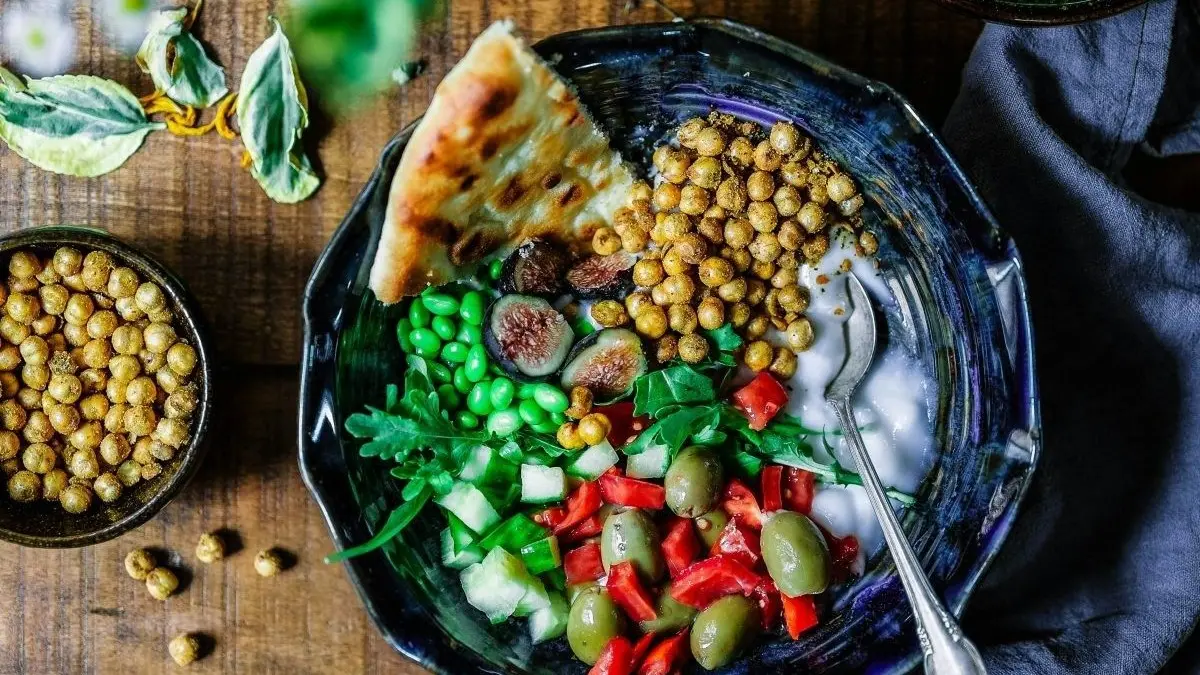
Simply eating enough protein is where it gets philosophically interesting. Because your body doesn’t think “ah, fish collagen!”, in the end it mostly sees amino acids. Your body makes its own collagen, and for that it mainly needs enough protein (the building blocks) and vitamin C (the indispensable helper in assembling it, it’s no coincidence that this building process stalls in vitamin C deficiency, as in scurvy). A varied diet with enough protein, vegetables and fruit supplies all of that. In other words: you don’t need a supplement to make collagen. A supplement is at most an extra nudge, not a requirement.
And those creams?
Here the science is surprisingly firm. There’s something called the “500 Dalton rule”: only very small molecules slip through the outer layer of skin. A collagen molecule is hundreds of times too large for that.

So what a collagen cream actually does is sit on top of your skin as a thin, moisture-holding film. That makes your skin feel briefly smoother and firmer, lovely, but temporary and superficial. The scaffold underneath isn’t topped up. A cream that promises to “replenish collagen” is mostly selling you a pleasant feeling, not a repair.
Joints and menopause: two common questions
For aching joints the evidence is weaker than for skin, but not empty. A special form, undenatured type II collagen, in a low dose, gave a modest but significant improvement in pain and stiffness in knee osteoarthritis studies. Honestly though: here too the studies are small and often linked to the manufacturer. For joint complaints, weight management, muscle strength and movement would probably do more than any jar, collagen is at most an extra.

Around menopause I often see a misconception: “menopause = collagen deficiency”. But the real story is hormonal. After menopause, skin collagen measurably declines because oestrogen falls. Oestrogen, it turns out, supports the collagen content, thickness, elasticity and hydration of the skin, and hormone therapy can partly counter that decline. Taking collagen might give a small nudge, but it doesn’t solve the hormonal cause. (Menopause really deserves a story of its own; I’ll dive into it properly in my next blog post.)
What would I tell someone who wants to try it?
Say a friend asks: “Ilhama, I’m 55, in menopause, getting a few wrinkles, should I take collagen?” An honest answer would be:
“You don’t have to. But if you’re curious, try the best-researched option: plain hydrolysed collagen powder, around 5 to 10 grams a day, for two to three months. Don’t expect miracles. If you notice a difference, lovely. If you notice nothing, you’ve probably not missed much.”
And the most important thing, which costs nothing: a good night’s sleep, protecting your skin from the sun, enough protein and not smoking probably do more for your skin than any scoop. The building site matters more than the lorry full of materials.

The deeper layer
What strikes me most about the “Collagen Era” isn’t the molecule. It’s how neatly the promise fits an old, human longing: to push time back a little, to get a grip on something that feels ungraspable.
And there’s a quiet paradox in it. We’re probably better fed, better protected and healthier than any generation before us. And yet we seem to worry more than ever about every sign of ageing. The better we fight ageing, the more afraid of it we sometimes become.
So perhaps that jar isn’t so much a molecule as a ritual. A small daily moment of self-care. A sense of control. And you know, there’s nothing wrong with that. As long as you know what you’re buying.

In closing
You don’t have to repair anything to be worth it. And if you’re still curious about that jar: go ahead, with your eyes open. It’s not a scam, there really is modest evidence that oral collagen can help the skin a little. But it’s no magic potion either, and much of the shine is in the marketing.
Which promise are you really buying when you put that jar in your basket and would you still believe it if there were no pretty label around it?
Related reading
- Menopause: Your Body Isn’t Broken
- Diets: what really works?
- Olive oil: liquid gold or liquid marketing?
- Glutamine: why “more” isn’t always “better”
- The body is not a calculator
- Creatine and creatinine: the biggest misunderstanding
Important: this article shares general science, not personal medical or dietary advice. If you’re unsure about supplements, take medication, or have skin or health concerns, talk to your GP or pharmacist. They can look at your situation, a blog can’t.
Sources
- Alcock, R. D., Shaw, G. C., & Burke, L. M. (2019). Bone broth unlikely to provide reliable concentrations of collagen precursors compared with supplemental sources of collagen used in collagen research. International Journal of Sport Nutrition and Exercise Metabolism, 29(3), 265–272. https://doi.org/10.1123/ijsnem.2018-0139
- Archer, D. F. (2012). Postmenopausal skin and estrogen. Gynecological Endocrinology, 28(Suppl. 2), 2–6. https://doi.org/10.3109/09513590.2012.705392
- Bella, J., & Hulmes, D. J. S. (2017). Fibrillar collagens. Subcellular Biochemistry, 82, 457–490. https://doi.org/10.1007/978-3-319-49674-0_14
- Bolke, L., Schlippe, G., Gerß, J., & Voss, W. (2019). A collagen supplement improves skin hydration, elasticity, roughness, and density: Results of a randomized, placebo-controlled, blind study. Nutrients, 11(10), Article 2494. https://doi.org/10.3390/nu11102494
- Bos, J. D., & Meinardi, M. M. (2000). The 500 Dalton rule for the skin penetration of chemical compounds and drugs. Experimental Dermatology, 9(3), 165–169. https://doi.org/10.1034/j.1600-0625.2000.009003165.x
- Brincat, M., Moniz, C. F., Kabalan, S., Versi, E., O’Dowd, T., Magos, A. L., Montgomery, J., & Studd, J. W. (1987). Decline in skin collagen content and metacarpal index after the menopause and its prevention with sex hormone replacement. British Journal of Obstetrics and Gynaecology, 94(2), 126–129. https://doi.org/10.1111/j.1471-0528.1987.tb02338.x
- de Miranda, R. B., Weimer, P., & Rossi, R. C. (2021). Effects of hydrolyzed collagen supplementation on skin aging: A systematic review and meta-analysis. International Journal of Dermatology, 60(12), 1449–1461. https://doi.org/10.1111/ijd.15518
- Lugo, J. P., Saiyed, Z. M., & Lane, N. E. (2016). Efficacy and tolerability of an undenatured type II collagen supplement in modulating knee osteoarthritis symptoms: A multicenter randomized, double-blind, placebo-controlled study. Nutrition Journal, 15, Article 14. https://doi.org/10.1186/s12937-016-0130-8
- Peres, G., Ianhez, M., Polo, T. C. F., Abbade, L. P. F., & Miot, H. A. (2022). Concerning the heterogeneity of the studies included in meta-analyses. Comment on: “Effects of hydrolyzed collagen supplementation on skin aging: A systematic review and meta-analysis”. International Journal of Dermatology, 61(3), e99–e101. https://doi.org/10.1111/ijd.15748
- Proksch, E., Segger, D., Degwert, J., Schunck, M., Zague, V., & Oesser, S. (2014). Oral supplementation of specific collagen peptides has beneficial effects on human skin physiology: A double-blind, placebo-controlled study. Skin Pharmacology and Physiology, 27(1), 47–55. https://doi.org/10.1159/000351376
- Pu, S.-Y., Huang, Y.-L., Pu, C.-M., Kang, Y.-N., Hoang, K. D., Chen, K.-H., & Chen, C. (2023). Effects of oral collagen for skin anti-aging: A systematic review and meta-analysis. Nutrients, 15(9), Article 2080. https://doi.org/10.3390/nu15092080
- Shigemura, Y., Iwai, K., Morimatsu, F., Iwamoto, T., Mori, T., Oda, C., Taira, T., Park, E. Y., Nakamura, Y., & Sato, K. (2009). Effect of prolyl-hydroxyproline (Pro-Hyp), a food-derived collagen peptide in human blood, on growth of fibroblasts from mouse skin. Journal of Agricultural and Food Chemistry, 57(2), 444–449. https://doi.org/10.1021/jf802785h
- Shigemura, Y., Iwasaki, Y., Tateno, M., Suzuki, A., Kurokawa, M., Sato, Y., & Sato, K. (2018). A pilot study for the detection of cyclic prolyl-hydroxyproline (Pro-Hyp) in human blood after ingestion of collagen hydrolysate. Nutrients, 10(10), Article 1356. https://doi.org/10.3390/nu10101356
Sources on this site are cited in APA style, with a DOI wherever one exists. Why I made that choice →

About the author
Ilhama | withilhama.com · Medical specialist
I believe a person is made of many layers — shaped by what we live through, lose, learn and rebuild.
I write about what lives beneath the surface: memories, scent, silence, cooking, health and resilience.
On withilhama.com I connect science with humanity — honestly, warmly, and with care for the stories behind the facts.
My deepest conviction is that prevention is better than cure. That is why I translate complex knowledge into clear insights that help you live more consciously and make better choices.