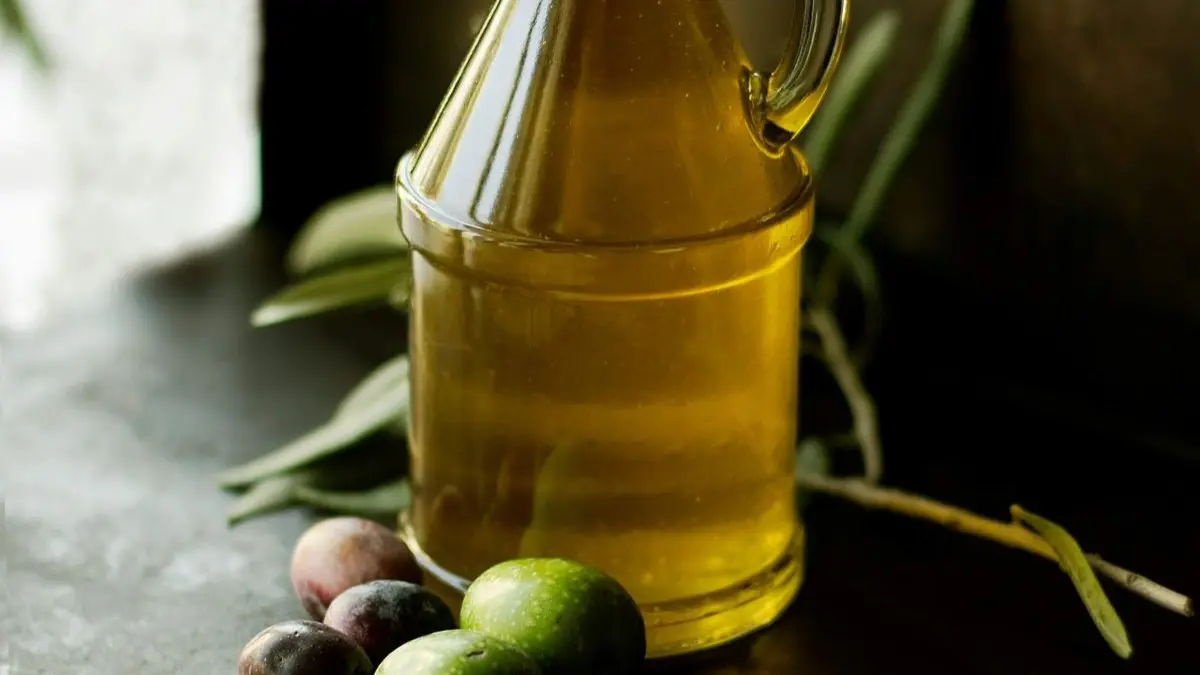
You’re standing in the supermarket, in front of the olive oil shelf. Ten bottles, ten promises. “Extra virgin.” “First press.” “Cold-extracted.” A bottle with a little Italian village on the label costs four euros; the one beside it, fifteen. And you think: does it actually make any difference? Is this health, or am I paying for a story?
It’s a fair question. And the answer is more nuanced than either the marketing or the sceptics would have you believe. Let’s tease it apart, calmly.
The study that was too convincing to finish
In Spain, one of the most famous nutrition studies ever ran its course: the PREDIMED study. And it’s a fascinating one.
More than 7,400 people at raised risk of cardiovascular disease were split into three groups.1 One group followed a Mediterranean diet with extra olive oil, free bottles, every week. The second followed that same diet with extra nuts. The third was given the standard “low-fat eating” advice. The study was planned to run for six years.
But after an average of 4.8 years, it was stopped early. Not because it was failing, precisely because it was working so clearly. The two Mediterranean groups had roughly 30% fewer heart attacks, strokes and deaths from cardiovascular disease than the control group.1 And the absolute figure belongs right here, because it makes the gain smaller than it sounds. In the olive oil group, 3.8% of participants had such an event, in the nut group 3.4%, in the control group 4.4%.1 The difference is real. It is also about six people in every thousand.
Here comes the honesty that belongs with it. PREDIMED had to be retracted and re-published in 2018.2 The researchers themselves found departures from their own protocol: at some places, household members of participants had been enrolled without separate randomisation, at one of the eleven study sites participants were assigned to a group without randomisation, and at another site the randomisation tables had been used inconsistently.1 After a thorough re-analysis, the conclusion still stood: the Mediterranean diet with olive oil helped.1 But it wasn’t a perfect study, and you deserve to know that.
Olive oil isn’t a thing. It’s a spectrum.
Here lies the heart of the confusion. We say “olive oil” as though it were one product. But between those bottles on the shelf lies a world of difference.
Picture olives as grapes, and oil as wine. A fresh, cold-pressed extra virgin is like a wine that still carries the taste of the grape. A refined oil is like alcohol from which all the flavour has been boiled out: still fat, but the soul is gone.
That difference lives in the polyphenols, tiny plant compounds the olive makes to protect itself. In extra virgin olive oil they’re largely preserved. In refined or “ordinary” olive oil they’re mostly stripped out during processing.
And that’s no detail. When the PREDIMED researchers looked separately at what people actually used, the link with less cardiovascular disease held above all for the extra virgin variety.3 A large American observational study of more than 92,000 people, followed over 28 years, found that those who ate the most olive oil, just over half a tablespoon a day, had a 19% lower risk of dying from any cause.4
Important: that last study is observational. That means it shows an association, not proof of cause. People who use a lot of olive oil often live more healthily in other ways too. The oil may be a sign of a healthy life, not only its engine.
The pepper in your throat isn’t a coincidence
Have you ever tasted a sip of fresh extra virgin and felt a tingling, peppery bite at the back of your throat? Almost a little cough?
That’s not a flaw. That’s a compound called oleocanthal. In 2005, researchers showed that in the laboratory oleocanthal blocks the same anti-inflammatory enzymes as ibuprofen, the COX enzymes.5 And there is a reason you feel it at the back of your throat and nowhere else in your mouth. Oleocanthal excites one specific sensor, called TRPA1, and within the mouth that sensor sits almost exclusively in the pharynx. Ibuprofen excites the very same sensor in the very same place.6
Lovely story. But let me temper it straight away, because this is where it’s often overblown. How much oleocanthal a bottle holds varies enormously by oil and by harvest: Australian extra virgin oils were measured at roughly 114 to 152 milligrams per kilo.7 A 2023 review reaches a sober conclusion: the amount you take in with an ordinary daily serving is probably too small to do in your body what oleocanthal does in a test tube.8 So olive oil is not a painkiller. But that peppery bite is a sign of a living, polyphenol-rich oil. The taste is, quite literally, a quality signal.

“You mustn’t cook with it”, is that true?
This is perhaps the most stubborn myth of all. You hear it everywhere: olive oil has a low smoke point, so keep it for cold use and fry with something else.
The science here is surprisingly reassuring. In a laboratory comparison of common cooking oils, the smoke point of extra virgin olive oil sat at around 207 °C.9 Most home cooking, stir-frying, braising, frying an egg, stays comfortably below 200 °C. And, more importantly: in that same study the smoke point turned out to be a poor predictor of how an oil actually behaves when heated.9 What really counts is oxidative stability: how well an oil holds its structure without forming harmful compounds. And there, extra virgin actually scores well, thanks to its mostly monounsaturated fats and those same protective polyphenols.9
One caveat, because it belongs here: that study came from a laboratory belonging to the olive oil industry itself.9 Which is why independent work matters here. Portuguese researchers deep-fried several oils for hours on end, until the legal limit for degradation products was reached. Every olive oil lasted longer than an ordinary vegetable oil blend: 24 to 27 hours against 15.10 The direction of the evidence is solid, but you’re entitled to know where some claims come from.
So what’s the answer to your question, cold or hot? Both. You can cook with it perfectly well. But heat does break down some of the polyphenols. Spanish researchers cooked the same oil at two temperatures: at 120 °C about 40% of the polyphenols disappeared, at 170 °C about 75%.11 Even so, the cooked oil in that study still stayed above the European threshold for the health claim.11 The practical solution is simple and rather lovely: cook freely with a decent olive oil, and keep a good, peppery extra virgin aside to drizzle over your dish after cooking. Raw over your salad, your soup, your roasted vegetables. That way you get both the flavour and the compounds that cooking would have damaged.
Is there even real olive oil in that bottle?
And then the question that perhaps occupies you most. You’ll have seen the viral headline: “69% of olive oil is fake.” It comes from a 2010 report by the University of California, Davis.12
But read the report carefully and that headline doesn’t hold. What they found was that 69% of imported “extra virgin” oil failed the taste test: too old, too oxidised, not the quality “extra virgin” ought to be.12 The chemical tests gave no sign of cheap seed or nut oil mixed in. If anything had been blended in at all, the researchers judged refined olive oil the likeliest candidate.12 “Failed the extra-virgin standard” is something very different from “fake”. On top of that, the report was part-funded by Californian olive oil producers, competitors of the imported oil.12 An interest worth weighing.
Later testing paints a calmer picture. Scientists at the American food authority, the FDA, examined 88 retail bottles of extra virgin. Three fell outside the purity standards, and the researchers put the occurrence of adulteration at under 5%.13 In 2025 came the largest olive oil testing programme to date: 216 samples, including the fifteen biggest brands, together around 85% of the market. Two samples, fewer than 1%, were adulterated, both from brands with a market share below 0.4%.14 Honestly stated: that programme was paid for by the industry body itself, the North American Olive Oil Association, though it was designed and led by a Yale biostatistician, with blind testing in laboratories recognised by the International Olive Council.14
So the honest conclusion is two-fold. Outright fraud, cutting olive oil with cheap seed oil, is rarer than the shouting headlines suggest. But quality fraud is real: an old, poorly stored or mediocre oil that nonetheless wears the “extra virgin” badge. Not poisoned. Just not what it promises. And it’s precisely that oil that lacks the polyphenols you were after in the first place.

So how do you choose?
Happily, there’s one reliable, official anchor. The European Union permits just one health claim for olive oil polyphenols: that they “contribute to the protection of blood lipids from oxidative stress”.15 A manufacturer may use that claim only if the oil contains at least 5 mg of hydroxytyrosol and related compounds per 20 grams, and the label must also tell you that the beneficial effect goes with a daily intake of 20 grams of olive oil.15 See that sentence on a bottle, and it’s a hard, regulated signal of quality.
And beyond that, in plain terms: choose a dark bottle (light breaks down the polyphenols), look for a harvest date and not just a best-before date, and trust your tongue, a good extra virgin is allowed to be bitter and peppery. Store it cool and dark, sealed. Oil that smells of old fat or cardboard is past its prime.
In closing
Olive oil is no miracle cure, and no swindle. It’s something more honest and more human: an ordinary product around which both real science and clever marketing have been built. The benefit doesn’t sit in one bottle, but in the pattern, in a way of eating and living where good oil is a small, daily gesture of care for yourself.
Perhaps that’s the deeper lesson. We so often go looking for that one magical thing that changes everything. Whereas real change is usually hidden in the small choices we repeat a hundred times.
Which small, daily choice are you already making, without even thinking about it any more, that quietly does you good? And when did you last stop to notice it?
On withilhama.com I don’t give medical advice. Do you have health questions or a specific condition? Discuss it with your GP or specialist.
Related reading
- Polyphenols: Why the Same Blueberry Works Differently
- The omega alphabet: what 3, 6, 7 and 9 actually do
- Diets: What Really Works?
Sources
The numbers in the text refer to this list.
- Estruch, R., Ros, E., Salas-Salvadó, J., Covas, M. I., Corella, D., Arós, F., Gómez-Gracia, E., Ruiz-Gutiérrez, V., Fiol, M., Lapetra, J., Lamuela-Raventos, R. M., Serra-Majem, L., Pintó, X., Basora, J., Muñoz, M. A., Sorlí, J. V., Martínez, J. A., Fitó, M., Gea, A., … Martínez-González, M. A. (2018). Primary prevention of cardiovascular disease with a Mediterranean diet supplemented with extra-virgin olive oil or nuts. New England Journal of Medicine, 378(25), e34. https://doi.org/10.1056/NEJMoa1800389
- Estruch, R., Ros, E., Salas-Salvadó, J., Covas, M. I., Corella, D., Arós, F., Gómez-Gracia, E., Ruiz-Gutiérrez, V., Fiol, M., Lapetra, J., Lamuela-Raventos, R. M., Serra-Majem, L., Pintó, X., Basora, J., Muñoz, M. A., Sorlí, J. V., Martínez, J. A., & Martínez-González, M. A. (2018). Retraction and republication: Primary prevention of cardiovascular disease with a Mediterranean diet. N Engl J Med 2013;368:1279-90. New England Journal of Medicine, 378(25), 2441–2442. https://doi.org/10.1056/NEJMc1806491
- Guasch-Ferré, M., Hu, F. B., Martínez-González, M. A., Fitó, M., Bulló, M., Estruch, R., Ros, E., Corella, D., Recondo, J., Gómez-Gracia, E., Fiol, M., Lapetra, J., Serra-Majem, L., Muñoz, M. A., Pintó, X., Lamuela-Raventós, R. M., Basora, J., Buil-Cosiales, P., Sorlí, J. V., … Salas-Salvadó, J. (2014). Olive oil intake and risk of cardiovascular disease and mortality in the PREDIMED Study. BMC Medicine, 12, Article 78. https://doi.org/10.1186/1741-7015-12-78
- Guasch-Ferré, M., Li, Y., Willett, W. C., Sun, Q., Sampson, L., Salas-Salvadó, J., Martínez-González, M. A., Stampfer, M. J., & Hu, F. B. (2022). Consumption of olive oil and risk of total and cause-specific mortality among U.S. adults. Journal of the American College of Cardiology, 79(2), 101–112. https://doi.org/10.1016/j.jacc.2021.10.041
- Beauchamp, G. K., Keast, R. S. J., Morel, D., Lin, J., Pika, J., Han, Q., Lee, C.-H., Smith, A. B., & Breslin, P. A. S. (2005). Phytochemistry: Ibuprofen-like activity in extra-virgin olive oil. Nature, 437(7055), 45–46. https://doi.org/10.1038/437045a
- Peyrot des Gachons, C., Uchida, K., Bryant, B., Shima, A., Sperry, J. B., Dankulich-Nagrudny, L., Tominaga, M., Smith, A. B., Beauchamp, G. K., & Breslin, P. A. S. (2011). Unusual pungency from extra-virgin olive oil is attributable to restricted spatial expression of the receptor of oleocanthal. The Journal of Neuroscience, 31(3), 999–1009. https://doi.org/10.1523/JNEUROSCI.1374-10.2011
- Cicerale, S., Conlan, X. A., Barnett, N. W., & Keast, R. S. J. (2011). The concentration of oleocanthal in olive oil waste. Natural Product Research, 25(5), 542–548. https://doi.org/10.1080/14786419.2010.511214
- Infante, R., Infante, M., Pastore, D., Pacifici, F., Chiereghin, F., Malatesta, G., Donadel, G., Tesauro, M., & Della-Morte, D. (2023). An appraisal of the oleocanthal-rich extra virgin olive oil (EVOO) and its potential anticancer and neuroprotective properties. International Journal of Molecular Sciences, 24(24), Article 17323. https://doi.org/10.3390/ijms242417323
- De Alzaa, F., Guillaume, C., & Ravetti, L. (2018). Evaluation of chemical and physical changes in different commercial oils during heating. Acta Scientific Nutritional Health, 2(6), 2–11. https://actascientific.com/ASNH/pdf/ASNH-02-0083.pdf
- Casal, S., Malheiro, R., Sendas, A., Oliveira, B. P. P., & Pereira, J. A. (2010). Olive oil stability under deep-frying conditions. Food and Chemical Toxicology, 48(10), 2972–2979. https://doi.org/10.1016/j.fct.2010.07.036
- Lozano-Castellón, J., Vallverdú-Queralt, A., Rinaldi de Alvarenga, J. F., Illán, M., Torrado-Prat, X., & Lamuela-Raventós, R. M. (2020). Domestic sautéing with EVOO: Change in the phenolic profile. Antioxidants, 9(1), Article 77. https://doi.org/10.3390/antiox9010077
- Frankel, E. N., Mailer, R. J., Shoemaker, C. F., Wang, S. C., & Flynn, J. D. (2010). Tests indicate that olive oil labeled as “extra virgin” often fails international and U.S. standards [Report]. UC Davis Olive Center. https://olivecenter.ucdavis.edu/sites/g/files/dgvnsk14776/files/media/documents/report2010finalthree.pdf
- Srigley, C. T., Oles, C. J., Fardin Kia, A. R., & Mossoba, M. M. (2016). Authenticity assessment of extra virgin olive oil: Evaluation of desmethylsterols and triterpene dialcohols. Journal of the American Oil Chemists’ Society, 93(2), 171–181. https://doi.org/10.1007/s11746-015-2759-4
- Kyriakides, T. C. (2025). 2024 olive oil testing study report. North American Olive Oil Association. https://www.aboutoliveoil.org/hubfs/2024-Olive-Oil-Testing-Study-Report.pdf
- European Commission. (2012). Commission Regulation (EU) No 432/2012 of 16 May 2012 establishing a list of permitted health claims made on foods, other than those referring to the reduction of disease risk and to children’s development and health. Official Journal of the European Union, L 136, 1–40. https://eur-lex.europa.eu/eli/reg/2012/432/oj
Sources on this site are cited in APA style, with a DOI wherever one exists. Why I made that choice →

About the author
Ilhama | withilhama.com · Medical specialist
I believe a person is made of many layers — shaped by what we live through, lose, learn and rebuild.
I write about what lives beneath the surface: memories, scent, silence, cooking, health and resilience.
On withilhama.com I connect science with humanity — honestly, warmly, and with care for the stories behind the facts.
My deepest conviction is that prevention is better than cure. That is why I translate complex knowledge into clear insights that help you live more consciously and make better choices.