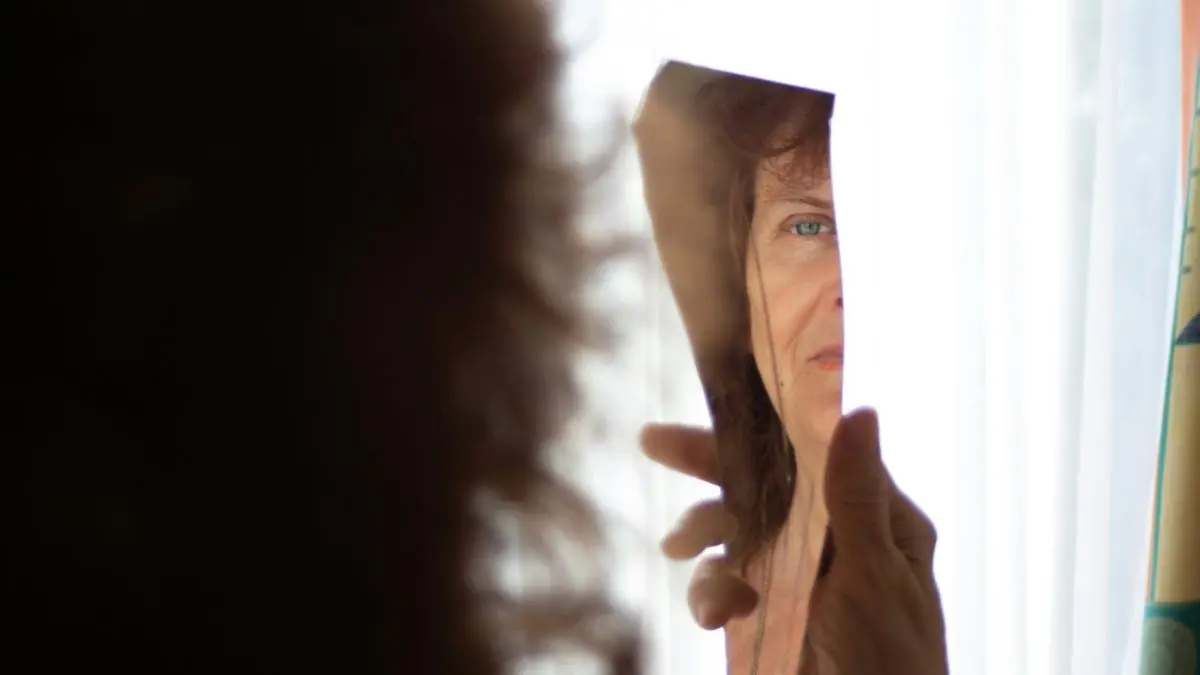
On silence, the body that has something to tell us, and the courage to listen
Imagine sitting in an empty room for a quarter of an hour. No phone. No book. No music. No one else. Just you and your thoughts.
For a great many people, that doesn’t sound like rest. It sounds like a punishment.
In 2014 the American psychologist Timothy Wilson actually asked people to do this. Across eleven studies he left participants alone with their thoughts for six to fifteen minutes. Many found it so unpleasant that they would rather give themselves a mild electric shock.1 I wrote about this remarkable experiment in more detail in an earlier piece, and if it intrigues you, you can read it there.
But in this article I want to ask a different question. Not: how are we being manipulated? Something more personal, and gentler:
Why has real rest, rest without stimulation, become unbearable for so many of us? And what are we missing because of it?
What happens when everything goes quiet
Our brain is not a machine that switches off when there is nothing to do. Quite the opposite. In 2001 the brain researcher Marc Raichle described how the brain holds a steady, organised baseline state even at rest, and how that state is interrupted the moment you are given a task.2 Scientists call that setting the default mode network. In plain language: the setting your brain falls into when it has nothing in particular to do.
That setting is not empty. A review of thirty years of brain imaging showed that this network is most active when you are not focused on the outside world: when you retrieve memories, when you picture the future, and when you imagine what someone else is thinking.3
And that is where the discomfort lives. When we grow quiet, the things we have kept at bay all day with busyness start to surface. Unprocessed feelings. Worries. Questions we would rather not ask. The voice that wonders: am I actually on the right path?
There is a hint that the wandering itself is already hard work. Two researchers, Matthew Killingsworth and Daniel Gilbert, used people’s phones to ask them at random moments what they were thinking about and how they felt. People turned out to be thinking about something other than what they were doing for almost half of their waking hours, and in those moments they felt less happy on average.4
And here the nuance belongs straight away. The researchers write that the wandering came before the unhappy feeling. Even so, this is a measurement of people in ordinary life, not an experiment under controlled conditions. It shows that the two travel together. It does not prove that everyone who drifts feels worse for it.
We think we are fleeing the silence. But that is not true. We are fleeing what rises up in the silence. The silence itself is innocent. It is what it makes visible that frightens us.

Why this is harder now than ever
People have always had moments of emptiness. Waiting for the bus. A queue at the shop. The moment before sleep. A walk with no destination. Once, those were little islands of quiet, built into the day whether we wanted them or not.
Today we carry in our pocket a device that can fill every one of those islands. No waiting moment need ever be empty again. No queue, no waiting room, no quiet moment before sleep. The instant emptiness threatens, we fill it, with scrolling, with videos, with news, with other people’s lives.
A small chemical in our brain plays a part here: dopamine. In 1997 Wolfram Schultz and his colleagues described how dopamine cells respond less to the reward itself than to the gap between what you expected and what you got.5 The psychologists Kent Berridge and Terry Robinson then separated two things we tend to confuse: wanting something and liking it. Dopamine largely drives the wanting, not the enjoying.6 In plain language: dopamine is not the chemical of pleasure, but of the longing for it.
And here something needs correcting, because a great deal of nonsense is told about dopamine. Your phone does not “drain your dopamine” and it does not break your reward system. What the research shows is about wanting in general: that the brain responds to what it does not have yet. That a device promising something new every second fits neatly onto this is a reasonable thought. For scrolling, it has not been demonstrated.
So it is not that we as people have grown weaker. It is that the stimulation has grown stronger, cleverer, and always present. We are not broken. We are overstimulated.
Does this mean the person who can be alone is the strongest?
Here I want to be honest, because this is a question that easily goes wrong.
It would be tempting to say: “whoever can sit alone with their thoughts has won, is the strongest, is happy.” But that is not true, and it is a dangerous thought.
On social media you see it often: videos of people radiating that they are perfectly happy alone, need no one, are flawlessly at peace. Do not believe that image too quickly. It is often staged and idealised, a single snapshot sold as the whole truth. A human being who truly needs no one does not exist. People are social creatures, and connection is not a weakness but a foundation of our existence.
Long-term loneliness is measurably unfavourable for health. A large meta-analysis drew together more than thirty years of research and found that social isolation raised the likelihood of early death by around 29 per cent, loneliness by 26 per cent and living alone by 32 per cent.7
And here is the nuance you almost never hear alongside it. These are relative figures. They say how much larger a risk becomes, not how large it is. Raise a small risk by 29 per cent and you still have a small risk. The researchers give no absolute number, because the studies spanned different countries, ages and years. Loneliness is a real health problem. These numbers are not here to frighten you, but because connection is too often dismissed as something soft.
Being able to be alone, then, is not the same as “needing no one.” And it is certainly no reason to look down on those who find it harder.
So what is true? This:
The healthiest person can do both. Be alone and connect. And chooses people out of freedom, not out of fear of the emptiness.
The capacity to be alone without panicking is a sign of a stable inner foundation. The psychiatrist Anthony Storr wrote a whole book about it.8 But the goal is not to become a loner who needs no one. The goal is to be able to bear the silence and to love people. Not one or the other. Both.

What your body is trying to tell you
Here comes the loveliest part, and the part I really want to leave you with.
When you do not flee the silence but stay in it a little while, something happens. You begin to notice things that lay hidden beneath the stimulation all day. Your breathing. The tension in your shoulders. A tiredness you had not allowed yourself to feel. Or the opposite: a calm, a contentment, a small happiness that needs no reason.
There is a scientific word for the ability to notice the signals of your own body: interoception. The researcher A. D. Craig described it in 2002 as a nervous system of its own, one that maps the condition of your body from the inside all the way up to the cortex.9 In plain language: it is your inner hearing. The ability to listen inward and feel what is happening in your body: your heartbeat, your breathing, hunger, tiredness, tension, ease.
Just as your eyes look outward, interoception looks inward. And here a misunderstanding needs clearing away, one you meet everywhere. People often say that those who listen well to their bodies are calmer for it and make better decisions. It is not that simple.
In eighty participants, researchers showed that “being good at interoception” is made up of three different things: how accurately you can actually count your own heartbeat, how good you think you are at it, and how well you sense when you have got it wrong. Those three came apart clearly.10 An international group later summarised the field and found that disturbed interoception plays a part in anxiety disorders, mood disorders, eating disorders and addiction, and that researchers still do not agree on how best to measure it.11
So what is left? This, and it is enough. Your body sends signals all day long. The knot in your stomach before a decision that is not right. The tiredness that says: rest now. The calm that says: this is good, stay here. Whether you can truly train yourself to catch those signals is still under study.11 That you only hear them when things are quiet for a moment stands to reason.
In constant stimulation, the noise drowns out the voice of your body. The silence is not empty. The silence is precisely where your body can finally be heard.

My own small ritual
I want to tell you something that works for me, not as a prescription, but as an example.
At the weekend I leave my phone in my bedside drawer until halfway through the morning. It stays there. No scrolling when I wake, no news, no messages, no notifications hijacking my morning before it has begun.
And I cannot tell you how productive I am then. How clear my head is. How much I get done, how much I notice, how much calm I feel. Those few hours without stimulation at the start of the day are often worth more than the rest of the day put together.
The curious thing is: at first it felt uncomfortable. My hand reached automatically for the phone. But after a few weeks it became something I looked forward to. The silence went from threat to gift.
How to begin, small and gentle
This is not a call to become a hermit or throw your phone away. It is an invitation to win back small moments of silence. A few ways to begin:
1. Take rest where you get the chance. Not as a grand exercise, but in the small moments that are already there. The queue at the till. Waiting for the kettle. The first minutes after waking. Let one empty moment a day be truly empty.
2. Listen to your breathing. The simplest anchor there is. You need not do anything special, only notice: I breathe in, I breathe out. For a few breaths. Your body does the rest.
3. When you are outside, listen to the outside. The birds. The wind in the trees. The rain on the window. These sounds ask nothing of you, sell you nothing, want nothing from you. They are simply there, and they cost nothing to notice. It is one of the purest forms of rest there is.
4. Begin by putting your phone away for one moment a day. Not all day. Not forever. Just one moment, the first hours of the morning, or the last half hour before sleep. See what happens. Be curious rather than strict.
5. Be kind to yourself when it feels uncomfortable. At first the silence will feel strange. Your hand will reach for the phone. That is normal. In Wilson’s studies a large share of participants found this unpleasant.1 The discomfort is not a sign that you are failing. It is a sign that you are learning something new.

In closing
Rest has not become unbearable because we are weak. Rest has become unbearable because we have forgotten how it feels, and because everything around us is built to keep us forgetting.
But it is not lost. It is waiting. In every empty moment you do not immediately fill. In every breath you pause to notice. In the sound of rain you let in rather than click away.
You do not have to conquer the silence like a strong loner who needs no one. You only have to let it in now and then, softly and curiously, like an old friend you have not seen in a while. And to listen to what your body, in that silence, has been wanting to say all along.
When were you last quiet for a few minutes, truly quiet, without stimulation? And what would your body tell you if you gave it the chance?
No demanding exercise. Just a question to carry with you, into the next silence you allow yourself.
Related reading
- Introvert or Extrovert: The Quiet Brain and the Loud Brain
- The Desire Path in Your Mind
- Discipline Doesn’t Begin with Making the Bed
Sources
The numbers in the text refer to this list.
- Wilson, T. D., Reinhard, D. A., Westgate, E. C., Gilbert, D. T., Ellerbeck, N., Hahn, C., Brown, C. L., & Shaked, A. (2014). Just think: The challenges of the disengaged mind. Science, 345(6192), 75–77. https://doi.org/10.1126/science.1250830
- Raichle, M. E., MacLeod, A. M., Snyder, A. Z., Powers, W. J., Gusnard, D. A., & Shulman, G. L. (2001). A default mode of brain function. Proceedings of the National Academy of Sciences of the United States of America, 98(2), 676–682. https://doi.org/10.1073/pnas.98.2.676
- Buckner, R. L., Andrews-Hanna, J. R., & Schacter, D. L. (2008). The brain’s default network: Anatomy, function, and relevance to disease. Annals of the New York Academy of Sciences, 1124(1), 1–38. https://doi.org/10.1196/annals.1440.011
- Killingsworth, M. A., & Gilbert, D. T. (2010). A wandering mind is an unhappy mind. Science, 330(6006), 932. https://doi.org/10.1126/science.1192439
- Schultz, W., Dayan, P., & Montague, P. R. (1997). A neural substrate of prediction and reward. Science, 275(5306), 1593–1599. https://doi.org/10.1126/science.275.5306.1593
- Berridge, K. C., & Robinson, T. E. (2016). Liking, wanting, and the incentive-sensitization theory of addiction. American Psychologist, 71(8), 670–679. https://doi.org/10.1037/amp0000059
- Holt-Lunstad, J., Smith, T. B., Baker, M., Harris, T., & Stephenson, D. (2015). Loneliness and social isolation as risk factors for mortality: A meta-analytic review. Perspectives on Psychological Science, 10(2), 227–237. https://doi.org/10.1177/1745691614568352
- Storr, A. (1988). Solitude: A return to the self. Free Press.
- Craig, A. D. (2002). How do you feel? Interoception: The sense of the physiological condition of the body. Nature Reviews Neuroscience, 3(8), 655–666. https://doi.org/10.1038/nrn894
- Garfinkel, S. N., Seth, A. K., Barrett, A. B., Suzuki, K., & Critchley, H. D. (2015). Knowing your own heart: Distinguishing interoceptive accuracy from interoceptive awareness. Biological Psychology, 104, 65–74. https://doi.org/10.1016/j.biopsycho.2014.11.004
- Khalsa, S. S., Adolphs, R., Cameron, O. G., Critchley, H. D., Davenport, P. W., Feinstein, J. S., Feusner, J. D., Garfinkel, S. N., Lane, R. D., Mehling, W. E., Meuret, A. E., Nemeroff, C. B., Oppenheimer, S., Petzschner, F. H., Pollatos, O., Rhudy, J. L., Schramm, L. P., Simmons, W. K., Stein, M. B., … Paulus, M. P. (2018). Interoception and mental health: A roadmap. Biological Psychiatry: Cognitive Neuroscience and Neuroimaging, 3(6), 501–513. https://doi.org/10.1016/j.bpsc.2017.12.004
Sources on this site are cited in APA style, with a DOI wherever one exists. Why I made that choice →

About the author
Ilhama | withilhama.com · Medical specialist
I believe a person is made of many layers — shaped by what we live through, lose, learn and rebuild.
I write about what lives beneath the surface: memories, scent, silence, cooking, health and resilience.
On withilhama.com I connect science with humanity — honestly, warmly, and with care for the stories behind the facts.
My deepest conviction is that prevention is better than cure. That is why I translate complex knowledge into clear insights that help you live more consciously and make better choices.