About old wisdom, an invisible note, and the evening I stopped believing my own grandmother.
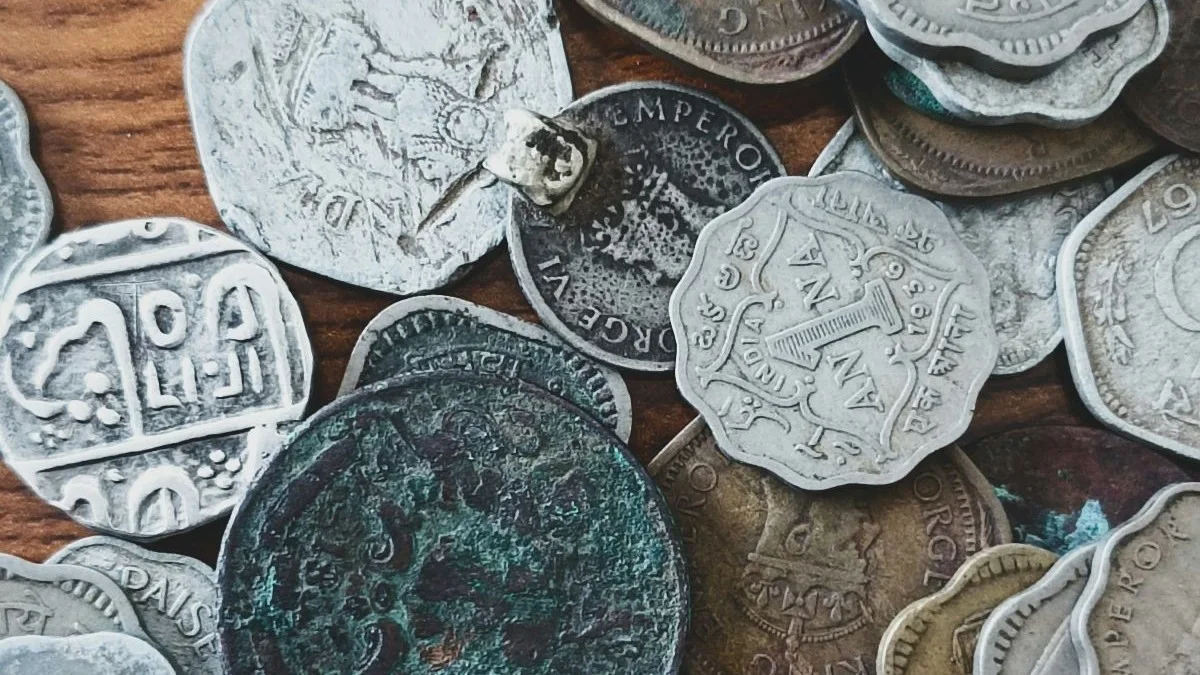
Picture a marsh on the banks of the Yangtze, in what is now China. Somewhere between nine and eleven thousand years ago, people there began doing something patient. They gathered wild grasses, watched which grains stayed on the stalk and which fell away, and year after year kept the best ones.
Rice was not rice straight away. At the earliest site, Shangshan, people ate water chestnuts, acorns and other grasses alongside it.1 Rice only won after thousands of years. Even the trait that makes rice harvestable, grains that stay put instead of shattering, took centuries longer to settle.2 Domestication was not an invention. It was a slow conversation between people and a plant.

And then the question that stayed with me. How did those people know rice was safe? There was no laboratory. No label. Only trying, remembering and passing it on. Anyone who ate something that was off became ill. The knowledge that survived is the knowledge of those who survived. Seen that way, every unwritten kitchen rule is a summary of thousands of years of trial and error. And without a fridge you cooked fresh, ate it all at once, or you dried, salted or deliberately fermented your food. Storing was a craft, not a switch.
My grandmother stood in the kitchen until she was 95
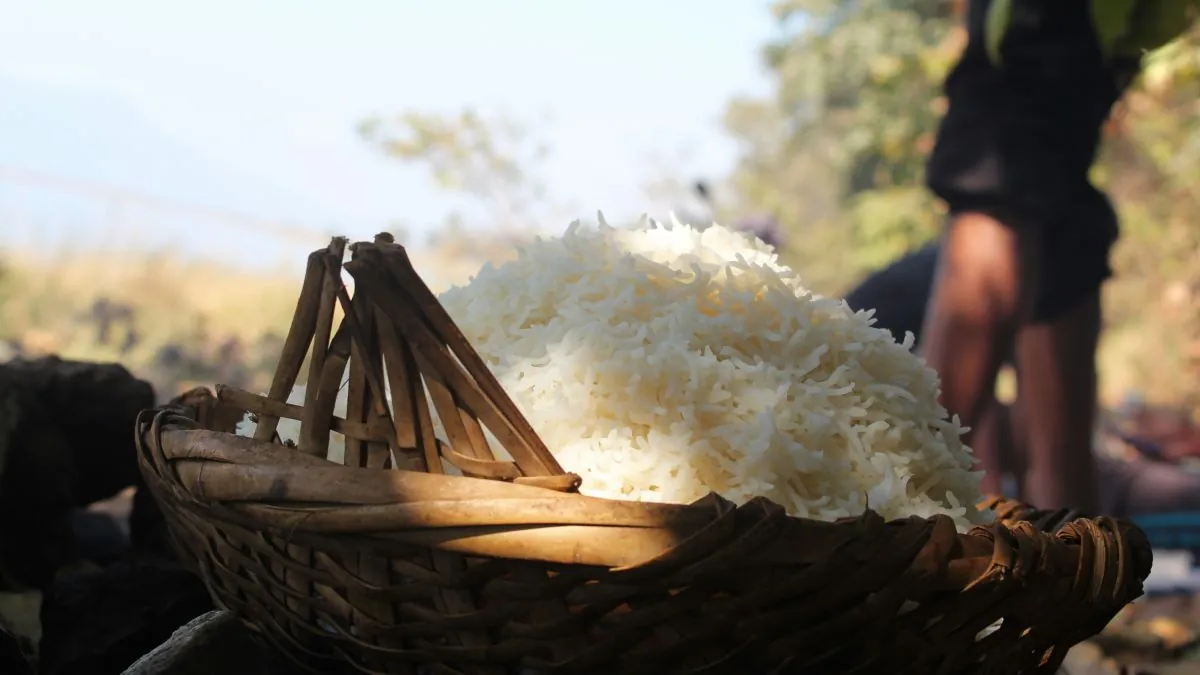
My grandmother sometimes left a pan of rice on the worktop all night. “It tastes better tomorrow,” she would say. My mother repeated it after her.
My grandmother lived to be a hundred. Until she was ninety-five she was still in the kitchen. Surely someone who cooks for that many years knows everything? A cook like that needs no instruction leaflet. The hands know. The nose knows. Unwritten rules, handed from kitchen to kitchen, from mother to daughter.
That is how I saw it too. Until one evening.
The evening my own confidence made me ill
I came home late from work. There was rice left. Reheat, eat, done. I had done it a thousand times. “That will never happen to me” is, incidentally, a sentence fate is particularly fond of hearing.
A few hours later I was thoroughly unwell. Nauseated, vomiting, wretched. And somewhere between two waves I knew for certain: this was the rice.
That is where this article begins. Not with a fact from the internet, but with a lesson of my own. I love evidence, and yet I trusted my grandmother’s pan blindly, without knowing what actually happens inside cooling rice. This piece is my way of finding out who was right: my grandmother, or that miserable evening.

The bacterium nobody recognises at a party
Her name is Bacillus cereus. Not a famous one. And yet she is the pathogen that turns up often in Dutch investigations of food-related outbreaks, particularly in leftovers of rice and noodle dishes.3 Her nickname is: fried rice syndrome.
To understand why rice is so often the suspect, you need to know where this bacterium lives. Her main home is the soil. She sits in earth, dust and on plants, everywhere, in small amounts. Rice grows low to the ground, in flooded fields. Researchers found that the bacterium travels into the grain as the plant grows, hiding as a spore inside the hardened seed.4 Rice therefore often carries her long before your pan is on the hob.
Why rice, and not an apple? Because cooked rice is a dream room for this bacterium. Plenty of starch to feed on. Enough moisture. A neutral acidity, not too sour. Leave that lukewarm on your worktop and you no longer have a side dish. You have an all-inclusive resort.
Outside the kitchen she has another face. She is an opportunist: mostly harmless, but if a door is left open, she slips through. In healthy people, serious trouble is rare. The severe infections almost always affect those already vulnerable: newborns, people with a weakened immune system, people after surgery or with an intravenous line. Then she can also cause bloodstream infection, meningitis, pneumonia or wound infections. One site is notorious: the eye. She is an important cause of endophthalmitis, a severe inflammation inside the eye, usually after injury or surgery.5

Worth saying immediately: these are rare stories, and they almost never concern yesterday’s plate of rice. Food poisoning caused by this bacterium is usually mild and settles by itself.5 These facts are here because I want you to see the whole portrait, not because you should be frightened. Statistically, my miserable evening was simply the ordinary version: unpleasant, short, and then over.
The sleeping bag that survives boiling water
How does she survive that boiling water? As a living cell, she cannot. But Bacillus cereus has a trick. When things get too hot or too dry, she climbs into a kind of sleeping bag: a spore. A survival capsule, rock hard and endlessly patient. It is also how she survives the drying of raw rice.
Cook the rice and the living bacteria die. The sleeping bags do not. In fact, the heat can give them a nudge to wake up.
As long as the rice is piping hot or properly cold, little happens. Things go wrong in the lukewarm middle ground, roughly between 5 and 60 degrees. Microbiologists call it the danger zone. And that is precisely the temperature of a pan of rice quietly cooling down. There she climbs out of her sleeping bag, multiplies rapidly, and leaves behind something you cannot see, smell or taste.
Why reheating does not wipe away the note
This bacterium makes roughly two kinds of toxin, and the difference explains almost everything.
The first causes diarrhoea and stomach cramps, usually half a day later. This toxin is sensitive to heat. Thorough reheating clears much of it away.
The second is the difficult one. It is called cereulide, and it causes nausea and vomiting within half an hour to six hours. This substance is remarkably heat resistant. In the laboratory, cereulide stayed intact at 100, at 121 and even at 150 degrees. The researchers concluded that no heat treatment used in the food industry renders it harmless.6
In plain language. Heat kills the bacterium itself. It does not remove the toxin she has already left behind.
It is as if someone leaves a poisonous note in your kitchen and then walks out. Reheating chases away the writer. The note stays where it is. That is what went wrong on my tired evening: I heated the pan properly, but the note was already lying there.

Why my grandmother’s rice was fine after all
If cooling rice is so treacherous, why did whole civilisations eat yesterday’s rice for centuries without trouble?
Go to Bengal, Assam or southern India. There is a dish there, panta bhat, that does exactly what my grandmother meant: yesterday’s rice, even better today. The secret lies in one detail that changes everything. The rice is not kept dry on the worktop. It is left overnight under water.
Something remarkable happens in that water. Friendly bacteria, with names such as Leuconostoc lactis and Weissella confusa, begin a mild fermentation. They produce lactic acid, which makes the water sour. Researchers also found that minerals such as iron, zinc and magnesium became more available afterwards, and that blood glucose rose less after eating it.7 Acidity is precisely what most harmful microbes cannot tolerate. Without a microscope, the tradition had built a moat around the food.
So my grandmother was not wrong. Only this: the safe overnight rice of the tradition sits in sour water. My modern short cut, a dry pan left lukewarm on the worktop, missed exactly that protection. The difference between wisdom and risk was water and acid.
And that is what makes today’s leftover rice so appealing. All over the world people give yesterday’s rice a new coat: fried rice, rice balls, soup, a salad, a bowl with an egg. Thrifty, creative and often tastier than the first time round. There is nothing wrong with any of it. It only shifts the weight of the rule. If you want to reuse rice, do not let it stand lukewarm. Cool it quickly and keep it cold. Good storage is exactly what makes that second life possible.

What is really inside the grain
Here I want to restore rice to its rightful place, because it is far more than a suspect. Rice feeds more than half of humanity, and not without reason.
At its core rice is mostly starch: steady energy, little fat, and naturally gluten free. But there is more inside, and how much depends on the processing. Brown rice is the whole grain, with its bran (the brown coat) and germ (the start of a new plant). The treasures sit in exactly those two layers: manganese, magnesium, phosphorus, selenium, some iron and zinc, B vitamins and fibre. White rice is the same grain, polished. That makes it softer, longer lasting and easier to digest, but many of those minerals and much of the fibre disappear. In many countries white rice is therefore enriched. Neither is the winner. It is a trade between richness and convenience.
Now something that closes the circle. The very cooling that gives the bacterium her chance also gives the rice something good. As cooked starch cools, the molecules rearrange into tight crystals that your gut breaks down less easily. Scientists call this retrogradation. The result is called resistant starch. In one study, resistant starch rose from 0.64 grams per 100 grams in freshly cooked white rice to 1.65 grams in rice chilled for a day at 4 degrees and then reheated. In fifteen healthy volunteers, that cooled rice produced a lower rise in blood glucose.8 Resistant starch behaves less like sugar and more like fibre: it feeds your gut bacteria.
Two substances that survive reheating, then. One that makes you ill and one that helps you. Do be honest about the scale. This was one small study with fifteen participants, the effect is modest, and your portion size does more for your blood glucose than the temperature does. No miracle. But a pleasant side effect of something you should be doing anyway.

And then the other side, because it belongs here. Rice takes up more inorganic arsenic from the soil than almost any other crop, because it grows in flooded fields. Brown rice holds slightly more, since it accumulates in the bran. For anyone eating rice a few times a week this is not a worry. It matters mainly when rice is your daily staple, during pregnancy, and for babies. You can reduce it yourself: rinse rice well, and cook it in plenty of water that you drain afterwards rather than letting it be absorbed. In research, cooking with six parts water to one part rice lowered inorganic arsenic by roughly 45 per cent.9 Alternating with other grains helps too.
How rice stays your friend
The sober guidance of the Netherlands Nutrition Centre, translated to your kitchen.10
- Cool it quickly. Spread the rice out in a shallow dish, or stand the pan briefly in cold water. The shorter the time in the lukewarm zone, the better.
- Into the fridge within two hours, at 4 degrees.
- Do not keep it too long. For rice and pasta dishes the Netherlands Nutrition Centre advises a maximum of two days. Advice differs between countries; stricter is always allowed.
- Reheat thoroughly, and stir halfway through in the microwave so no cold spots remain.
- Rice that has stood at room temperature for more than two hours: do not reheat it again.
- Freezing is fine, but freezing does not kill the sleeping bags. It only pauses them. So cool it quickly first.
This article provides general information and is not medical or psychological advice. If you have questions about your own health or wellbeing, please speak with your GP or a treating specialist.

My grandmother had no fridge at 4 degrees and no pH strips. What she had was a kitchen full of inherited wisdom and, without knowing it, a moat of sour water. I had all the science within reach and trusted a dry pan blindly. Looking back, that miserable evening was almost a gift. It taught me that an unwritten rule only truly becomes yours once you understand why it exists.
Which kitchen rule did you inherit, and when did you last ask why it exists at all?
Related reading
- Fermented foods: what they really do to your gut
- The organ that never grows old: a short history of your gut
- E numbers: what that small code on your label really tells you
Sources
The numbers in the text refer to this list.
- Yang, X., Fuller, D. Q., Huan, X., Perry, L., Li, Q., Li, Z., Zhang, J., Ma, Z., Zhuang, Y., Jiang, L., Ge, Y., & Lu, H. (2015). Barnyard grasses were processed with rice around 10000 years ago. Scientific Reports, 5, Article 16251. https://doi.org/10.1038/srep16251
- Gross, B. L., & Zhao, Z. (2014). Archaeological and genetic insights into the origins of domesticated rice. Proceedings of the National Academy of Sciences of the United States of America, 111(17), 6190–6197. https://doi.org/10.1073/pnas.1308942110
- National Institute for Public Health and the Environment. (2019). Voedselgerelateerde uitbraken in Nederland, 2006–2017 (Report 2019-0059). https://www.rivm.nl/publicaties/voedselgerelateerde-uitbraken-in-nederland-2006-2017
- Ministry for Primary Industries. (n.d.). Risk profile: Bacillus cereus in rice and starchy foods. https://www.mpi.govt.nz/dmsdocument/44125-Risk-Profile-Bacillus-cereus-in-rice-and-starchy-foods
- Bottone, E. J. (2010). Bacillus cereus, a volatile human pathogen. Clinical Microbiology Reviews, 23(2), 382–398. https://doi.org/10.1128/CMR.00073-09
- Rajkovic, A., Uyttendaele, M., Vermeulen, A., Andjelkovic, M., Fitz-James, I., in ‘t Veld, P., Denon, Q., Vérhe, R., & Debevere, J. (2008). Heat resistance of Bacillus cereus emetic toxin, cereulide. Letters in Applied Microbiology, 46(5), 536–541. https://doi.org/10.1111/j.1472-765X.2008.02350.x
- Afrin, S., Orr, C. H., Kuba, S., Naser, S. R., Farooq, R., Khan, S., Menon, M., Zanetti-Domingues, L., & Sarker, M. H. (2024). Microbiome profile and nutritional benefits of traditional overnight soaked cooked rice. Food and Humanity, 3, Article 100410. https://doi.org/10.1016/j.foohum.2024.100410
- Sonia, S., Witjaksono, F., & Ridwan, R. (2015). Effect of cooling of cooked white rice on resistant starch content and glycemic response. Asia Pacific Journal of Clinical Nutrition, 24(4), 620–625. https://doi.org/10.6133/apjcn.2015.24.4.13
- Raab, A., Baskaran, C., Feldmann, J., & Meharg, A. A. (2009). Cooking rice in a high water to rice ratio reduces inorganic arsenic content. Journal of Environmental Monitoring, 11(1), 41–44. https://doi.org/10.1039/b816906c
- Netherlands Nutrition Centre. (n.d.). Bacillus cereus. https://www.voedingscentrum.nl/encyclopedie/bacillus-cereus.aspx
Image: Boiarskii, A.-N. E. (1874–1875). Town surrounded by rice fields, with mountains in the background, China [Photograph]. National Library of Brazil; via World Digital Library and Wikimedia Commons. Public domain (Public Domain Mark 1.0). https://commons.wikimedia.org/wiki/File:Town_Surrounded_by_a_Rice_Field_and_Mountains_in_the_Background._China,_1874-75_WDL2056.png
Sources on this site are cited in APA style, with a DOI wherever one exists. Why I made that choice →

About the author
Ilhama | withilhama.com · Medical specialist
I believe a person is made of many layers — shaped by what we live through, lose, learn and rebuild.
I write about what lives beneath the surface: memories, scent, silence, cooking, health and resilience.
On withilhama.com I connect science with humanity — honestly, warmly, and with care for the stories behind the facts.
My deepest conviction is that prevention is better than cure. That is why I translate complex knowledge into clear insights that help you live more consciously and make better choices.